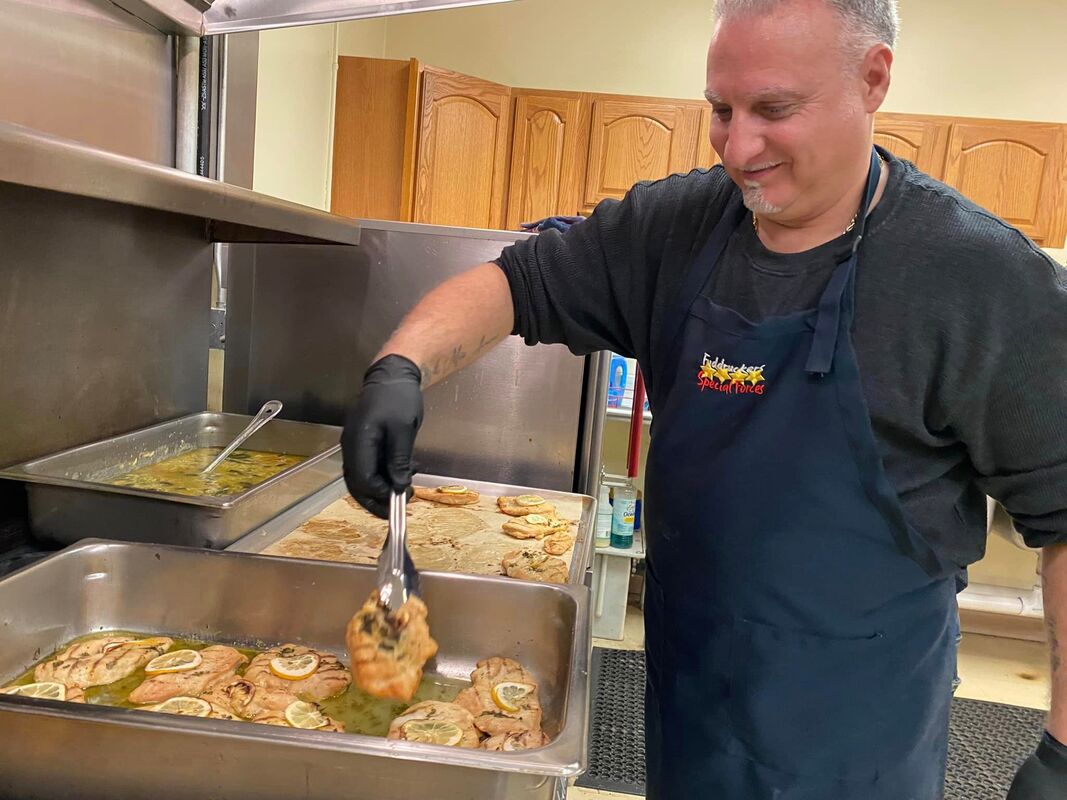
For decades, LCCM’s free noon meal program was a dine-in program open to anyone in the community who needed a meal. COVID-19 brought that model to a screeching halt in 2020.
For the next 22 months, guests could only pick up a take-out meal. The noon meal went from serving an average of 75-100 people a day pre-pandemic, to more than 250 people daily.
Because of the significant increase, many of the meals had to be rapidly prepared each day, and as a result were higher in sodium, saturated fat and sugar.
When the noon meal resumed dine-in service in May 2022 and the average number of guests fell back to pre-pandemic levels, staff noticed many guests said they suffered from chronic health conditions, ranging from diabetes to cancer.
For the next 22 months, guests could only pick up a take-out meal. The noon meal went from serving an average of 75-100 people a day pre-pandemic, to more than 250 people daily.
Because of the significant increase, many of the meals had to be rapidly prepared each day, and as a result were higher in sodium, saturated fat and sugar.
When the noon meal resumed dine-in service in May 2022 and the average number of guests fell back to pre-pandemic levels, staff noticed many guests said they suffered from chronic health conditions, ranging from diabetes to cancer.
2022 was a year of reflection for the noon meal program: How will it look moving forward? What kind of food should be served? Is it only about serving a meal, or could it be more?
We went straight to the source and conducted two surveys: an informal survey with guests about their food preferences, as well as a formal, in-depth survey conducted by a team from Penn State REACH (Racial and Ethnic Approaches to Community Health), a national program administered by the Centers for Disease Control and Prevention (CDC) to reduce racial and ethnic health disparities.
Of the 64 guests surveyed by Penn State REACH, 73% indicated they had a chronic illness.
Of those who said they had a chronic illness, 49% have high blood pressure, 34.7% have diabetes, 28.6% have high cholesterol, 18.4% have heart disease, and 32.7% answered ‘other.’ Additionally, 46.9% said they have been diagnosed with a mental illness.
“This meal is our community’s meal, and we want to serve them,” said Bryan Smith, LCCM’s executive director. “We believe we have learned a lot through this survey and our partnership with Penn State REACH. We intend to continue to institute best practices and make changes, which are valued by our guests, and creating an environment where each guest is a person and relationships are valued.”
Here are five other highlights from the survey:
According to the informal food choice survey conducted by Heather Kumler, LCCM’s free noon meal coordinator, LCCM identified the top meats, vegetables and fruits guests prefer. Beef, chicken and fish were the top three meats, while broccoli, green beans and peas were the top vegetables. Guests surveyed also indicated a preference for fresh fruit, not canned, and preferred fruit salad medley, followed by pineapple and mandarin oranges.
“We will strive to bring health and high-quality food to this meal,” Smith said. “While food is a big part of it, community is clearly valued by those we serve. We want to DO our mission and vision: to share the love of Jesus by sharing this meal and invest in people and improve lives. The noon meal provides a platform for connections.”
Hearing directly from our guests about their needs and views provides crucial information that will not only help LCCM design programs tailored to specific needs, but it will help our community partners engage directly with guests to get the services they need.
We are excited to see the changes that will happen at LCCM and in people’s lives over the course of 2023.
We went straight to the source and conducted two surveys: an informal survey with guests about their food preferences, as well as a formal, in-depth survey conducted by a team from Penn State REACH (Racial and Ethnic Approaches to Community Health), a national program administered by the Centers for Disease Control and Prevention (CDC) to reduce racial and ethnic health disparities.
Of the 64 guests surveyed by Penn State REACH, 73% indicated they had a chronic illness.
Of those who said they had a chronic illness, 49% have high blood pressure, 34.7% have diabetes, 28.6% have high cholesterol, 18.4% have heart disease, and 32.7% answered ‘other.’ Additionally, 46.9% said they have been diagnosed with a mental illness.
“This meal is our community’s meal, and we want to serve them,” said Bryan Smith, LCCM’s executive director. “We believe we have learned a lot through this survey and our partnership with Penn State REACH. We intend to continue to institute best practices and make changes, which are valued by our guests, and creating an environment where each guest is a person and relationships are valued.”
Here are five other highlights from the survey:
- 50% of those surveyed said they are enrolled in Supplemental Nutrition Assistance Program (SNAP) – formally known as food stamps.
- 48.4% of those surveyed said rent, by far, was the biggest barrier to consistently being able to afford food.
- Besides eating a meal, economic reasons and community were tied at 54.8% as the number one reason those surveyed come to the noon meal
- The top five outside services requested to be brought in-house include: spiritual guidance and counseling (62.5%), housing and/or utility assistance providers (60.9%), support groups (57.8%), nutritional education (56.3%), and tied for fifth are physical/mental health services (51.6%) and disability services.
- 59.4% of those surveyed said it is very important and 37.5% said it is important to cook with fresh foods. However, 35.5% of those surveyed said they somewhat agreed and 35.9% said they strongly agreed that it is too expensive to buy ingredients to prepare healthy foods.
According to the informal food choice survey conducted by Heather Kumler, LCCM’s free noon meal coordinator, LCCM identified the top meats, vegetables and fruits guests prefer. Beef, chicken and fish were the top three meats, while broccoli, green beans and peas were the top vegetables. Guests surveyed also indicated a preference for fresh fruit, not canned, and preferred fruit salad medley, followed by pineapple and mandarin oranges.
“We will strive to bring health and high-quality food to this meal,” Smith said. “While food is a big part of it, community is clearly valued by those we serve. We want to DO our mission and vision: to share the love of Jesus by sharing this meal and invest in people and improve lives. The noon meal provides a platform for connections.”
Hearing directly from our guests about their needs and views provides crucial information that will not only help LCCM design programs tailored to specific needs, but it will help our community partners engage directly with guests to get the services they need.
We are excited to see the changes that will happen at LCCM and in people’s lives over the course of 2023.